
Credit cards: add up the annual fee, then read the APR

Cards for fair or rebuilding credit often charge a yearly fee and a high APR. The fee is what you pay even if you never carry a balance. The APR is what you pay if you do. Read both before the rewards.

No. 1 Credit card

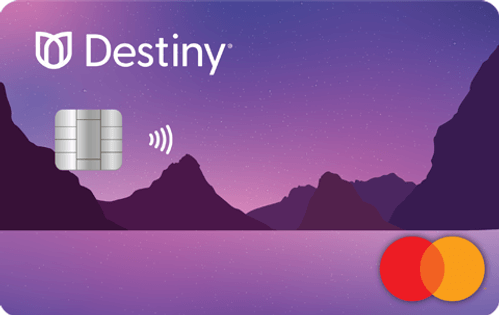
Destiny® Mastercard® with $1,000 Credit Limit

Suits A guaranteed $1,000 starting limit

Annual fee
$250 the first year; $99 thereafter
Credit limit
$1,000
APR
35.9%
Monthly fee
$0 the first year (billed $0 each month); $231 annually thereafter (billed $19.25 each month)

Guaranteed $1,000 credit limit

  • Guaranteed $1,000 credit limit if approved
  • No security deposit required
  • Reports to all 3 credit bureaus

Applications are subject to issuer review and approval. Annual fees, APRs, and credit limits vary by applicant.
No. 2 Credit card

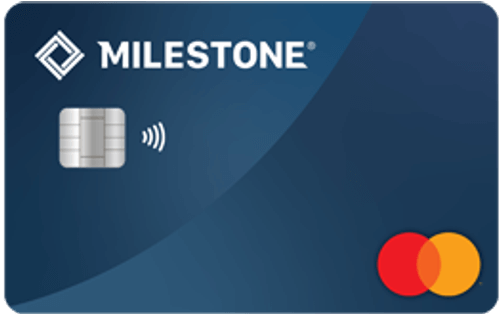
Milestone® Mastercard® - $1,000 Credit Limit

Suits A $1,000 unsecured line with no deposit

Annual fee
$250 the first year; $99 thereafter
Credit limit
Up to $1,000
APR
35.9%
Security deposit
None
Monthly fee
$0 the first year (billed $0 each month); $231 annually thereafter (billed $19.25 each month)

Unsecured line up to $1,000

  • Unsecured credit line up to $1,000
  • No security deposit required
  • Reports to all 3 credit bureaus

Applications are subject to issuer review and approval. Annual fees, APRs, and credit limits vary by applicant.

Reviewed November 2026How we write

Sponsored listings. A partner may pay FinOneLoan when you click or sign up, and that can influence the order. Our funding

Reading the offers

How to compare these cards

Rewards get the headline, but on cards like these the fees decide the cost. Work through four figures in this order and write them down for each card.

  1. 1. Annual fee, year one and year two

    Several cards charge one fee the first year and a different fee after. Add two years together to see the real cost of keeping the card. A card that is cheaper in year one can cost more by year two.

  2. 2. APR

    The APRs listed here run from 35.9 to 36 percent, so they barely separate the cards. What matters is your plan. Pay in full each month and the APR costs you nothing on purchases. Carry a balance and a card like these is an expensive way to borrow.

  3. 3. Credit limit against the fee

    Divide the first year fee by the limit. That share of your credit is used up before you buy anything. It also raises your utilization, the part of your limit in use, which credit scores take into account.

  4. 4. Rewards after the fee

    Cash back only helps once it passes the annual fee. Take the rate, multiply by what you expect to spend in the reward categories, and subtract the fee. If the result is below zero, the rewards are not a reason to pick the card.

Read this first

The short version

  1. The annual fee comes off your limit

    An annual fee is often charged to the account when it opens. A $175 fee on a $700 limit leaves $525 to spend until you pay it.

  2. APR only bites if you carry a balance

    Pay the full statement balance by the due date and most cards charge no interest on purchases. Carry $1,000 at 36 percent APR and interest runs about $30 a month.

  3. The issuer decides

    We list card details. The card issuer reviews your application, sets your limit and can change terms. Check its site for current fees and APR.

See how long a balance takes to clear

Time to pay it off

Of every $1 you repay, is interest.

Total interest
Total paid

This is an estimate. Your card issuer sets the real APR, minimum payment and fees, and they can change.

Glossary

Words you will meet

Annual fee
A yearly charge for having the card. It is billed even if you do not use the card.
Purchase APR
The yearly interest rate on purchases you do not pay off by the due date.
Credit limit
The most you can owe on the card at a given time. Fees and interest count toward it.
Unsecured card
A card that does not need a cash deposit. A secured card holds your deposit as backing.
Utilization
The share of your credit limit you are using. Lower is generally better for your credit score.

Questions

Questions about credit cards

Which matters more, annual fee or APR?

It depends on how you pay. If you clear the full balance each month, you pay no purchase interest, so the annual fee is your whole cost. If you carry a balance, the APR matters more with every month. Most people should check the fee first, because it is charged no matter what.

How do I work out if cash back beats the fee?

Estimate a year of spending in the reward categories and multiply by the cash back rate. For example, 3 percent on $2,000 of spending is $60. Compare that with the annual fee. Read the card's reward terms as well, since some rates apply only up to a spending cap or to certain purchases.

Can a card with a fee help build credit?

A card can help if the issuer reports to the credit bureaus and you pay on time, every time. Keeping your balance low against your limit also helps. The fee itself does nothing for your score. A secured card from a bank or credit union may do the same job for less, so compare.

What does a 36 percent APR cost in dollars?

Divide by 12 to get a rough monthly rate, here about 3 percent. On a $500 balance that is about $15 of interest in a month. On $1,000 it is about $30. Paying only the minimum keeps most of that balance in place, so the interest repeats.

Why might my limit be lower than the listed limit?

Listed limits are often the most an issuer will give, shown as up to an amount. The issuer sets your limit after it reviews your application. Check the offer terms on the issuer's site, and remember the annual fee may be charged against the limit right away.